

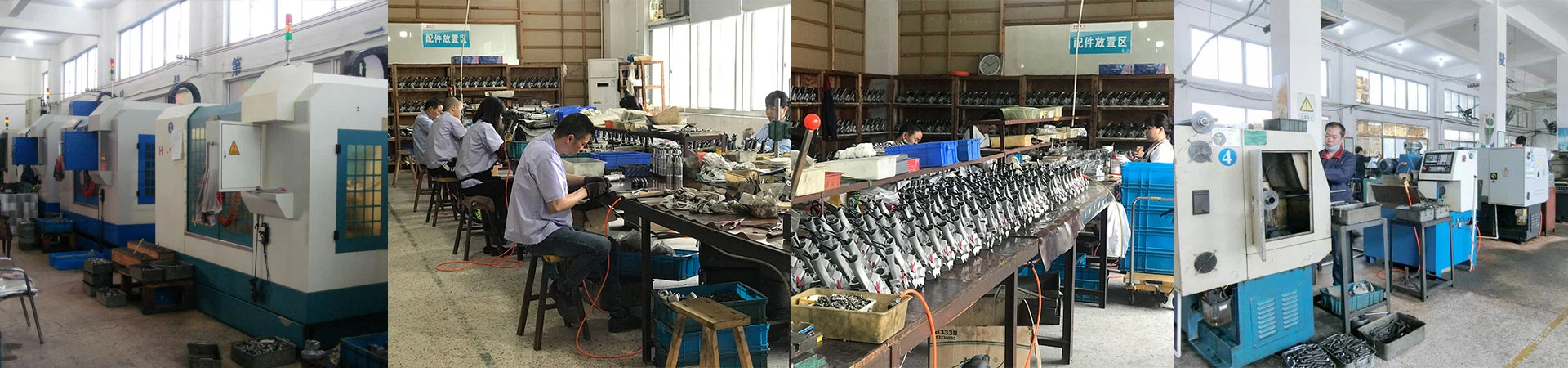
As core equipment of industrial packaging, Pneumatic banding tools has a direct impact on production efficiency and product safety. According to industry practice and equipment principle, this paper systematically describes the key points of pneumatic banding tools maintenance and the solution of common malfunctions, and provides technical guidance for operators.
Daily maintenance points.
1.Lubrication System Management
Lubrication of the pneumatic motor is the key to prolong the service life of equipment. You need to check the oil level daily to make sure you use 22# turbine oil and control the oil supply to 40-60 drops per minute through the regulating valve. For example, BAND-IT tools requires lubricant to be installed no more than 3 metres from the tool and the direction of the oil mist is consistent with the direction of the airflow. If motor is running slowly, check immediately to see if lubrication system is clogged or running low on oil.
2.Pneumatic Pressure Calibration
Compressed air pressure shall be strictly maintained in the range of 0.4 -0.6 MPa. Too low pressure can lead to insufficient tension in the belt, and too high pressure can lead to component failure. Take the A25 pneumatic plastic strap banding machine, whose air valve throttles require precise alignment with a flathead screwdriver, altering tension output by approximately 5% with each quarter-turn. In addition, daily discharge of condensate from the filter is necessary to prevent moisture induced corrosion of pneumatic components.
3.Periodic Inspection Critical Components
- Band feeding system: weekly cleaning of grease and debris on the belt feeding roller, using Allen wrench to adjust the gap to 0.5-0.7 mm, to ensure smooth belt feeding.
- Tensioning Mechanism: Check tensioning cogs for wear and tear every month. If tooth profiles dulls or spacing widens to more than 0.2mm, replace the component. For example, the SM1700 tool can restore spacing issues by adding gaskets under the teeth blocks.
- Welding Assembly: Check resistance value of heating element after every 500 operations. If it exceeds the rated value by 10%, replace and sand the oxidized layer to smooth surface.
Typical Fault Diagnosis and Repair
1. Belt feeding fails
Symptoms: After pressing the start button, the band cannot feed.
Troubleshooting Process:
- Verify correct direction band roll installation-the wrong orientation can cause interference.
- Make sure there are no missing guide wheels in the belt and cross-reference them with the equipment manual diagram.
- Listen to motor running:
- No sound: Check if the fuse is blown loose or the end of the wiring is loose.
- Sound but no feed: Remove motor gearbox to replace worn gears or belts.
Measure feed roller pressure: Test pressure using spring scale, adjust pressure spring if pressure is less than 8 N.
2. Insufficient Tensioning Force
Symptoms: Band fails to reach preset tension, allowing the load to relax.
Solutions:
- Mechanical adjustment: Increase tension by up to 10% at a time through the control panel ``tension adjustment knob ''.
- Component Inspection:
- Clean the pieces of tension wheel with compressed air.
- Check the tension of the clutch spring and replace if松弛 (slack) more than 15%.
- Replace worn brake pads to ensure a braking friction coefficient ≥0.3.
Environmental Optimization: Install equipment insulation in cold storage to increase heating temperatures above 180 degrees Celsius.
3. Tool malfunction
Symptoms: Band is still uncut or showing rough cut edges.
Solution Steps:
- Check the edge of the blade: grind at ° with a special millstone to maintain blade sharp.
- Adjust cutter position: Measure the gap between the tool and blade holder with a a feeler gauge and maintain a standard of 0.1-0.15 mm.
- Service pneumatic components:
- Pneumatic tools: Check cylinder seals for aging, replace O-ring, and test air leakage rates ≤0.5 L/min.
- Solenoid valves: wash the Flush valve bodies with a cleaning agent and reapply grease.
4. Electrical System Failures
Symptoms: Control panel displays no output or no response.
Emergency Measures:
- Check the status of the main board indicator:
- Complete shutdown: Measure input voltage stability at 220V ±10%, survey triggers emergency stop button.
- Flashing alarms: Use error code sheet Locate faulty modules (for example, E02 indicates that the heating element is disconnected).
- Temporary Alternatives: If heating elements fail and no spare parts are available, replace them with equivalent nichrome and isolate them with mica sheets to prevent short circuits.
Preventive Maintenance Strategies
- Set up maintenance records: Document component replacement time and parameter adjustments for each service. For example, the A35199 tool requires tension calibration every three months.
- Operator Training: Enforce "Three Prohibitions" principles:
- Don't force the jammed bands.
- Do not exceed load limits (single load ≤80% of tool rated capacity).
- Do not operate continuously in humid conditions for more than 2 hours.
Spare Parts Inventory Management: Stock components with high failure rates, such as cutters, heating elements and pressure springs, to maintain production demand for three months.
By implementing system maintenance and accurate fault diagnosis, the failure rate of pneumatic banding tool failure rates can be reduced by over 60%, and the equipment lifespan can be extended to 1.5 times the design cycle. It is recommended that enterprises should develop individualized maintenance plan according to equipment manuals and arrange professional deep maintenance regularly to maximize production benefit.