

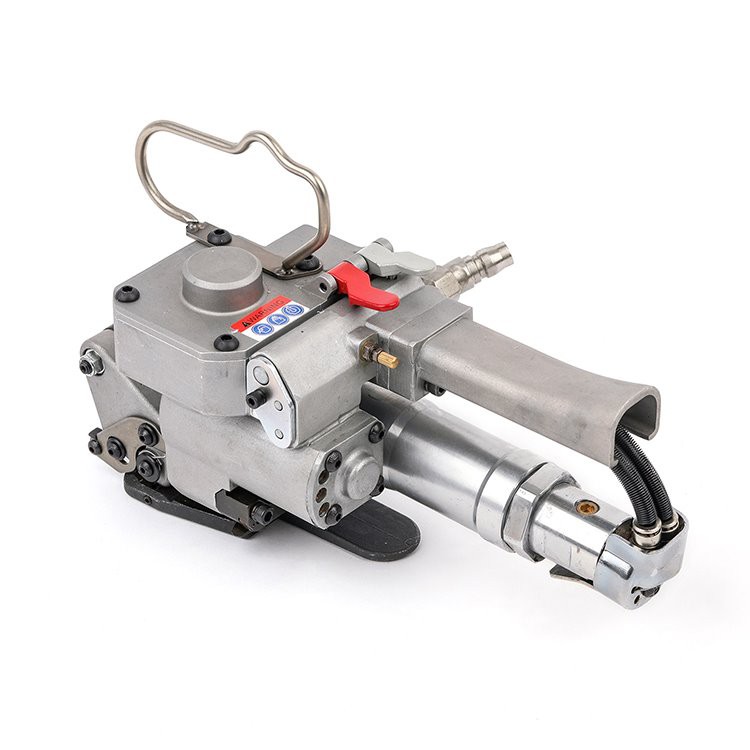
Pneumatic strapping tools is commonly used in the field of industrial packaging professional equipment. They use compressed air to drive an internal pneumatic system to tighten, secure and seal strapping tape. Strapping force is an important parameter to evaluate the performance of pneumatic strapping tools. Appropriate tension can not only ensure the safety of packaging, but also prevent strap breakage and product deformation caused by excessive force.
In actual production, different products have different requirements for binding force. Heavy products such as steel and wood, for example, require more tension, while cardboard boxes and light packaging require relatively gentler strapping pressure. Therefore, correctly adjusting the packing force of pneumatic strapping tools is a key step to ensure packaging quality and transportation safety.
1.Controlling Strapping Force by regulating gas source pressure
The power source of pneumatic strapping tools is compressed air, so the pressure of the gas source directly influences the output power of the equipment.
In general, the higher the source pressure, the more power the pneumatic motor or cylinder produces and the more tension force the binding tool provides. Conversely, a lack of air pressure can lead to problems such as slow tightening and failure to reach the set tension.
When adjusting the pressure of the gas source, it is necessary to set up according to the requirements of the product packaging requirements:
For heavy products such as steel coils, steel pipes, mechanical equipment, high pressure of gas source is required to achieve a good securing effect.
For cartons, plastic products and other lightweight products, the pressure should be appropriately reduced to avoid straps too tight, resulting in packaging damage.
In practice, avoid blindly increasing air pressure. Excessive pressure will not only damage the internal parts of the tool, but also shorten the service life of the equipment.
2. Precise control using the tool's tension adjustment device
Most industrial-grade pneumatic strapping tools are equipped with tension adjustment mechanism to control the tension of the binding.
Operators can adjust the output tension of equipment by adjusting knobs, pressure valves or control switches.
In the adjustment process, the following should be noted:
First, determine the appropriate tension range according to the weight and size of the packaged goods.
Secondly, carry on the actual test, observes the packing belt and the product match degree.
Finally, according to the test results, the tension is fine-tuned to achieve a stable packing state.
If the tension is too low, the strapping may come loose during transport, causing goods to shift.
If the tension is set too high, the following problems may occur:
Wrap broken;
Pressure deformation on Packaging surface deformation;
Product edge damage;
Increased tool workloads.
Therefore, proper tension adjustment is more important than simply seeking greater strength.
3.Force regulation based on different strips
Pneumatic strapping tools can often be used with a variety of packaging straps, including steel straps, PET plastic and PP belts.
Different materials have different tensile strengths and therefore require different binding forces.
Steel Straps
Steel belt strength is high, mainly used in steel, metal products, machinery and other heavy products packaging.
When steel straps are used, higher tension can be set to ensure the stability of large cargo during transport.
PET Plastic Straps
PET strips have good toughness and impact resistance and are commonly used in export packaging, pallet packaging and industrial transport. When adjusting the tension, pay attention to the balance of fastening effect and elasticity of the material to avoid excessive tension and damage to the plastic straps.
PP Straps
PP packing belt is mainly used for light packaging, such as cardboard boxes, food packaging, general logistics goods, etc.
Since the bearing capacity of the material is low, a lower tension should be used to prevent the belt from breaking.
4. Tension regulation based on packing weight and structure
The tension adjustment of pneumatic strapping tools shouldnot solely depend on the strapping itself, but also consider the characteristics of packing product.
For heavier products:
Increased binding tension;
Increase the number of bundled passes;
Choose high-strength belts.
Products such as steel, stone and wood, for example, can be severely affected during transport and require higher safety intensity.
For products with soft or easily deformed surfaces:
Reduce tension;
Add protective padding or cushioning material;
Avoid direct pressure binding from the product surface.
For example, for products such as cardboard boxes and furniture panels, excessive tension can damage the edges of the packaging.
5. Test and adjust for optimal binding effect
Bundling tests are recommended before formal bulk packaging.
Here are a few things to look out for during the test:
Is this belt fastened tightly?
Will the goods move after packing?
Is there a noticeable distortion in the packing belt?
Is the seal safe?
Is the equipment stable during simulated transport?
According to the test results, the air pressure and tension settings can be adjusted step by step so that the equipment is in the most optimal working condition.
For manufacturing enterprises, the formulation of tension parameter standards for different products can improve the consistency of packaging and reduce human error.
6.Regular maintenance to ensure Stable Strapping Force
After long use, improper maintenance of pneumatic strapping tools will result in lower output force.
Common influencing factors include:
Air leakage from the pneumatic system;
Internal wear and tear;
Blocking filters
Insufficient lubrication;
Aging of the tensioning mechanism.
Therefore, it is necessary to check the air supply system regularly, keep the air clean and dry, and add lubricant according to the equipment requirements.
At the same time, the wear and tear of key components such as tensioning wheel and clamping mechanism should also be checked. If tension is found to decrease, repair or replace the components in time.
Conclusion:
Adjusting the packing force of pneumatic strapping tools requires a combination of factors, including gas source pressure, equipment adjustment function, packaging materials, product weight, etc.. Appropriate tension can improve the stability of packaging, reduce the risk of damage during transport, and extend the service life of equipment and packaging materials.
In the use of pneumatic strapping tools, enterprises should not simply pursue greater tension, but should choose appropriate parameters according to actual packaging needs. Through proper adjustment and regular maintenance, the advantages of high efficiency and reliability of pneumatic strapping tools can be fully realized.
Frequently Asked Questions
1. Is the packing force of pneumatic strapping tools higher the better?
No. Strapping force needs to be adjusted according to product weight, packaging materials and transportation requirements. Too much force causes the packaging tape to break or the product to deform.
2. Does a lack of air pressure affect pneumatic strapping tools?
Yes. ' Insufficient air pressure will lead to a decrease in tensioning speed, or even hinder the achievement of design tension, affecting packaging effectiveness.
3. Do different straps require different tension adjustments?
Yes. ' The strength of Steel strapping, PET strapping and PP band is different. The appropriate tension should be adjusted according to the material properties.
4. How to determine if binding tension is appropriate?
Proper tension should ensure that the goods are safe and that the straps are not severely deformed and the surface of the product is not damaged.
V. How often should pneumatic strapping tools be maintained?
Specific intervals depend on frequency of use and working environment. It is recommended that the air supply system, lubrication components and tensioning mechanism be inspected regularly to ensure long-term stable operation of the equipment.