

In modern society, plastic banding tool have been widely used in production and daily life. In factories, they are used to ensure the safety of cargoes and the stability of transport; in logistics warehouses, they are used to bundle packages for more efficient handling; and at home, they are used to organize miscellaneous items. These tools are easy to use and safe to bind. This paper introduces the use plastic strapping tools, including basic steps, tension adjustment, safety precautions, etc., in order to improve work efficiency and ensure safe operation.
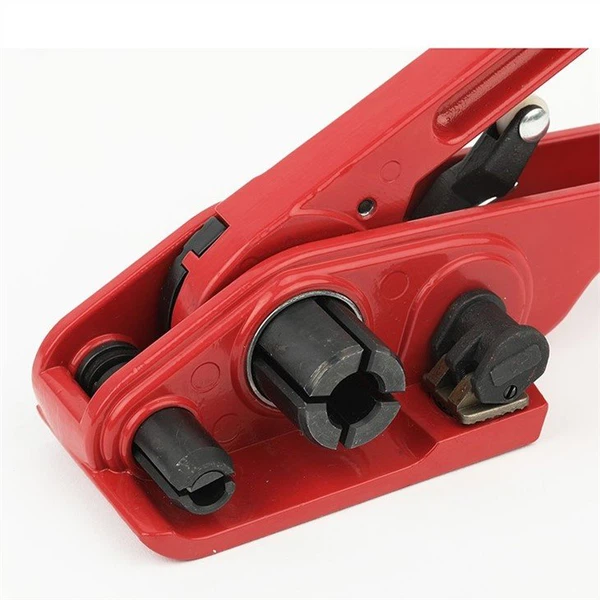
Basic operating procedures
(I) Preparation
It is vital to be prepared before using plastic wrap tools. First, double-check if the tool has any damaged or missing components, such as whether the tool is sharp and whether the ratchet is rotating properly to make sure the tool is in good working condition. Next, select the appropriate plastic bindings based on the characteristics of the bindings. Different strapping materials are suitable for different applications. For example, PP strapping is suitable for lighter items and the PET strapping is suitable for heavier items. In order to ensure the correct tying effect, the width and thickness of the tying band should also be considered. In addition, to ensure smooth and stable work area, prevent items from sliding the strapping process, affect the baling accuracy and security.
(II) Threading Operation
Threads are a key step in using plastic wrap tools. First, wrap the bound items in plastic tape. Depending on the shape of the item and the binding requirements, you can choose to wrap the item around the entire binding area. You can also use specific binding patterns, such as crossover or crossover, for irregularly shaped items or items that require more security. the strapping tape is then correctly passed through the packing slot of the plastic packing tool. During this process, pay special attention to the directional markings on the tool to ensure that the belt is inserted in the correct direction. Failure to do so may affect subsequent tightening and fixing operations.
(3) Tightening process.
Depending on the type of tool, the tightening process is also different. Manual tools usually use mechanisms such as ratchets and levers to tighten belts. Get the correct technique, force evenly, move slowly, and avoid straps being broken or damaged. Electric or pneumatic tools are relatively simple to operate. Simply press the appropriate tightening button and the tool will tighten the belt using an electric motor or air force. During this process, care should be taken to tighten to ensure that the appropriate force is achieved.
(IV) Security and Cutting
Once the strapping tighten to the desired extent, they need to be fixed and cut. Different types of tools use different securing methods. Pneumatic tools typically use friction welding to fuse the ends of a belt together over high temperatures; some hand tools use methods such as pliers or metal nails. After securing, use a tool or cutting device built into the tool to cut off the excess bindings. Keep the knife steady during cutting to ensure smooth cutting and avoid burrs or incomplete breaks.
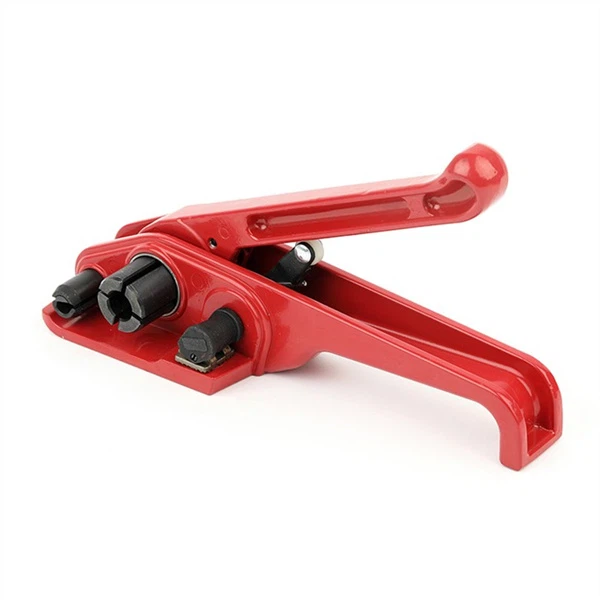
Adjust the tightness to achieve the best bundling effect
1) Determine the Appropriate Tightness
Determining the appropriate the strapping tightness is key to ensuring effective bundling. If the strapping is too loose, there will be a large gap between the strapping and the item, making the item liable to shift or even fall off during transport or removal. If the bindings are too tight, they can dig into surfaces and damage items. It can also show signs of breaking, compromising the secureness of seat belts.
(2) Adjust tension of manual tools.
The tension of a hand tools can be adjusted in a variety of ways. One method is to adjust the ratchet or lever travel. The longer the trip, the tighter the belt; the shorter the trip, the tighter the belt. In addition, operating force will also affect the tightness of the belt: the more force, the tighter the belt. In addition, some hand tools have adjustable components, such as screws or knobs. Rotating these components alters tension within the tool, adjusting tightness. The specific adjustment method depends on the specific tool type.
(3) Adjust tension Electric/Pneumatic Tools.
Electric tools mainly regulate tension by adjusting the torque of the motor. Some power tools are equipped with a knob-type adjuster, which can change the output torque of motor intuitively; others are equipped with digital control settings, which can set torque parameters more accurately and achieve precise control of bond tension. Pneumatic tools affects the tension of the belt by adjusting the air pressure. This is usually done by adjusting the air valve. The more pressure, the tighter the belt. Specific adjustment steps will depend on the type of pneumatic tool used.
(4)Adaptation project characteristics.
Different items require different strapping tensions. For fragile objects such as glass and ceramics, tension should be reduced to avoid breakage due to excessive sealing. During use, the tightening force can be reduced or a lower tension setting can be selected. For heavier, thicker articles, such as large machinery, thicker articles, etc., tension should be increased to ensure that the bindings are strong and prevent loosening during transport. You can increase the tightening force or choose gears with higher tension.
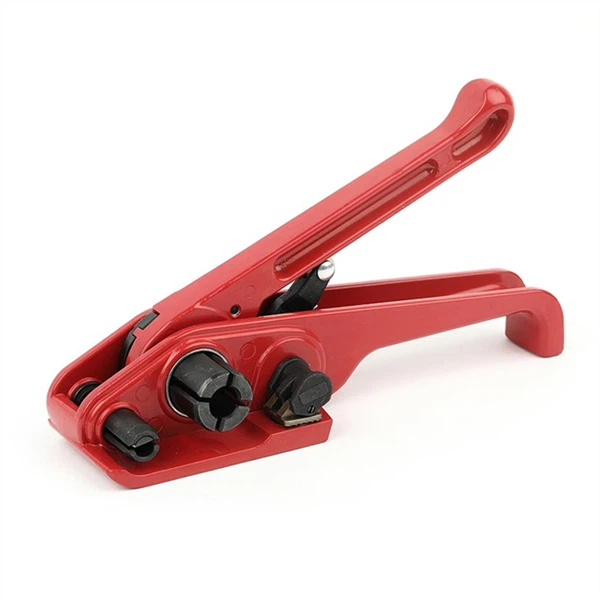
INTRODUCTION Safety Considerations
(I) Safety Risks during operations
There are some safety concerns when using plastic banding tool. On one hand, if you apply too much force during tightening or if the the strapping itself is defective, it can break and bounce, potentially causing injury. In addition, the possibility of hand pinching cannot be ignored. This may occur when a hand tools operates a ratchet or tool, or when operating electric or pneumatic tools.
(II) Protective Measures
In order to prevent the occurrence of safety accidents, appropriate protective measures must be taken. It is important to wear protective gloves to prevent scratches and clamps on your belt when operating tools. Protective glasses are also essential, as debris can splatter when the bindings break.
(III) Tool Usage Specifications
There are certain rules that must be adhered when using plastic strapping tools. In the course of using the tool, it is strictly forbidden to carry out maintenance and cleaning operation, so as to avoid accidents. At the same time, the tool must be used within its rated parameters and must not be overloaded. Failure to do so would not only shorten the tool's service life, but also create security problems.
(iv) Emergency response
If the tool fails during use, such as if the tool is stuck or smoking, stop using it immediately and cut off power or air supply to prevent further malfunction. If injured, minor scratches or scratches can be treated with simple disinfection and hemostasis. Those with more serious injuries should be promptly sent to hospital for professional treatment.
To boost productivity and keep yourself safe, you need to know how to use plastic banding tool correctly. To make sure that binding goes smoothly, you need to know how to do the essential steps, such as getting ready, threading, tightening, fastening, and cutting. To get the optimum binding effect, you need to modify the tightness of the article and choose the right approach to apply force. Paying attention to safety while using tools, knowing the dangers, adopting the right safety precautions, following the rules for using tools, and knowing what to do in an emergency can all help keep accidents from happening. I hope this essay helps people use plastic strapping tools better, which will make life and work easier . I hope this article can help the user to use plastic strapping tools better, to bring convenience to production and life.