

When it comes to securing heavy loads and ensuring the stability of various industrial products, steel banding is a reliable and widely used solution. To effectively tighten steel banding, crimpers play a crucial role. In this blog, we'll delve into the torque requirements for tightening steel banding with crimpers, providing valuable insights for those in the industry. As a trusted Steel Banding Crimpers supplier, we understand the importance of getting these details right.
Understanding Steel Banding and Crimpers
Steel banding, also known as steel strapping, is a strong and durable material used for bundling, securing, and palletizing goods. It can withstand high tension and is resistant to corrosion, making it ideal for heavy-duty applications in industries such as construction, manufacturing, and logistics. Crimpers, on the other hand, are tools designed to attach seals to the steel banding, creating a tight and secure connection.
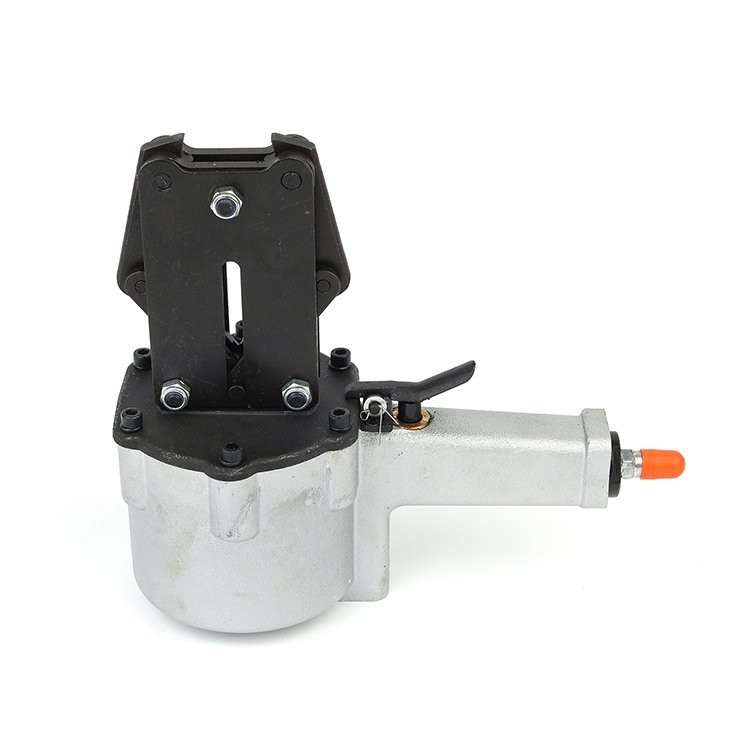
There are different types of crimpers available in the market, including manual, pneumatic, and battery-powered ones. Each type has its own advantages and is suitable for different scenarios. Manual crimpers are cost - effective and portable, making them a good choice for small - scale operations or when power sources are not readily available. Pneumatic crimpers, such as the Pneumatic Steel Banding Tool, offer high - speed and consistent performance, which is beneficial for large - scale industrial applications.
Factors Affecting Torque Requirements
The torque required for tightening steel banding with crimpers is not a one - size - fits - all value. Several factors influence this requirement:
1. Banding Thickness and Width
Thicker and wider steel banding requires more torque to achieve a proper crimp. Thicker bands have greater strength and resistance to deformation, so more force is needed to compress the seal and create a secure joint. For example, a 1/2 - inch wide and 0.030 - inch thick steel band will require more torque compared to a 1/4 - inch wide and 0.015 - inch thick band.
2. Seal Type
There are various types of seals used with steel banding, such as notch - lock seals, flat - lock seals, and snap - lock seals. Each seal type has a different design and requires a specific amount of torque to form a reliable connection. Notch - lock seals, for instance, rely on the teeth of the seal biting into the steel band to hold it in place. They typically require a certain level of torque to ensure that the teeth penetrate the band effectively.
3. Application Environment
The environment in which the steel banding is used also affects the torque requirements. In a high - vibration environment, such as on a moving conveyor or a vehicle, a higher torque may be needed to prevent the banding from loosening over time. Similarly, if the banding is exposed to extreme temperatures, the material properties of the steel and the seal may change, necessitating adjustments in the torque setting.
Determining the Optimal Torque
To determine the optimal torque for tightening steel banding with crimpers, it is recommended to follow the manufacturer's guidelines. The manufacturers of steel banding, seals, and crimpers usually provide detailed specifications regarding the appropriate torque values based on the product combinations.
In addition to the manufacturer's recommendations, it is also possible to conduct practical tests. Start by setting the torque at a relatively low value and gradually increase it while observing the quality of the crimp. A good crimp should have a uniform and tight connection between the banding and the seal, without any signs of excessive deformation or damage to the band.
Using a torque - measuring device, such as a torque wrench, can help ensure that the correct torque is applied consistently. This is especially important in large - scale operations where consistency is key to maintaining the quality and safety of the strapped products.
Importance of Correct Torque
Applying the correct torque when tightening steel banding with crimpers is of utmost importance for several reasons:
1. Safety
Insufficient torque can result in loose banding, which may cause the bundled items to shift or fall during handling, transportation, or storage. This poses a significant safety risk to workers and can also lead to damage to the products. On the other hand, excessive torque can damage the steel banding, weaken the seal, or even cause the band to break, which is equally dangerous.
2. Product Integrity
Properly tightened steel banding helps maintain the integrity of the products being strapped. It prevents them from getting damaged due to movement or impact. For example, in the construction industry, steel - banded bundles of pipes or rods need to be securely fastened to ensure that they arrive at the construction site in good condition.
3. Cost - Efficiency
Using the correct torque can also contribute to cost - efficiency. By avoiding over - tightening or under - tightening, the lifespan of the steel banding and the seals can be extended, reducing the need for frequent replacements. Moreover, it can prevent product losses due to improper strapping, which can save both time and money in the long run.
Other Related Tools and Their Roles
In addition to crimpers, other tools are often used in conjunction with steel banding operations. The Strap Seal Crimping Tool is specifically designed for crimping seals onto the steel banding. It provides a precise and reliable way to create a secure connection.
The CR - 22 Heavy Duty Steel Strapping Cutter is another essential tool. It is used to cut the steel banding to the desired length. A sharp and well - maintained cutter ensures a clean cut, which is important for the proper functioning of the crimp and the overall quality of the strapping job.
Conclusion
In conclusion, understanding the torque requirements for tightening steel banding with crimpers is crucial for ensuring the safety, integrity, and cost - efficiency of industrial strapping operations. Factors such as banding thickness and width, seal type, and application environment all play a role in determining the optimal torque. By following the manufacturer's guidelines and conducting practical tests, it is possible to achieve the best results.
As a leading Steel Banding Crimpers supplier, we are committed to providing high - quality products and comprehensive technical support. If you have any questions regarding the torque requirements for your specific steel banding applications or need advice on choosing the right crimpers and related tools, we encourage you to contact us for a detailed discussion. Our team of experts is ready to assist you in making the most suitable choices for your business.
References
- Manufacturer's manuals for steel banding, seals, and crimpers.
- Industry standards and guidelines for steel strapping applications.