

Hey there! As a supplier of Banding Tensioner Tools, I often get asked about the torque range of these nifty devices. So, let's dive right in and explore what the torque range of a Banding Tensioner Tool is all about.
First off, let's understand what torque is. In simple terms, torque is the rotational force applied to an object. When it comes to Banding Tensioner Tools, torque is crucial because it determines how tightly the strapping can be secured around a package or load. If the torque is too low, the strapping might not hold the load firmly, leading to potential damage during transit. On the other hand, if the torque is too high, it could break the strapping or even damage the load itself.
The torque range of a Banding Tensioner Tool can vary widely depending on several factors. One of the main factors is the type of strapping material being used. For instance, if you're using plastic strapping like polypropylene (PP) or polyethylene terephthalate (PET), the torque requirements will be different compared to steel strapping.
Plastic strapping is more flexible and less strong than steel strapping. So, the torque range for Banding Tensioner Tools used with plastic strapping is generally lower. A typical torque range for a Banding Tensioner Tool used with plastic strapping could be anywhere from 5 to 30 Nm (Newton - meters). This range allows for a secure hold without over - tightening and breaking the plastic strapping.
On the other hand, steel strapping is much stronger and more rigid. Banding Tensioner Tools designed for steel strapping need to be able to apply a much higher torque. The torque range for these tools can be anywhere from 30 to 100 Nm or even higher, depending on the thickness and width of the steel strapping.
Another factor that affects the torque range is the size and weight of the load being strapped. For small, lightweight packages, a lower torque setting on the Banding Tensioner Tool will usually suffice. But for large, heavy loads, a higher torque is required to ensure the strapping can withstand the weight and movement during handling and transportation.
Let's talk a bit about the different types of Banding Tensioner Tools available and how their torque ranges might vary.
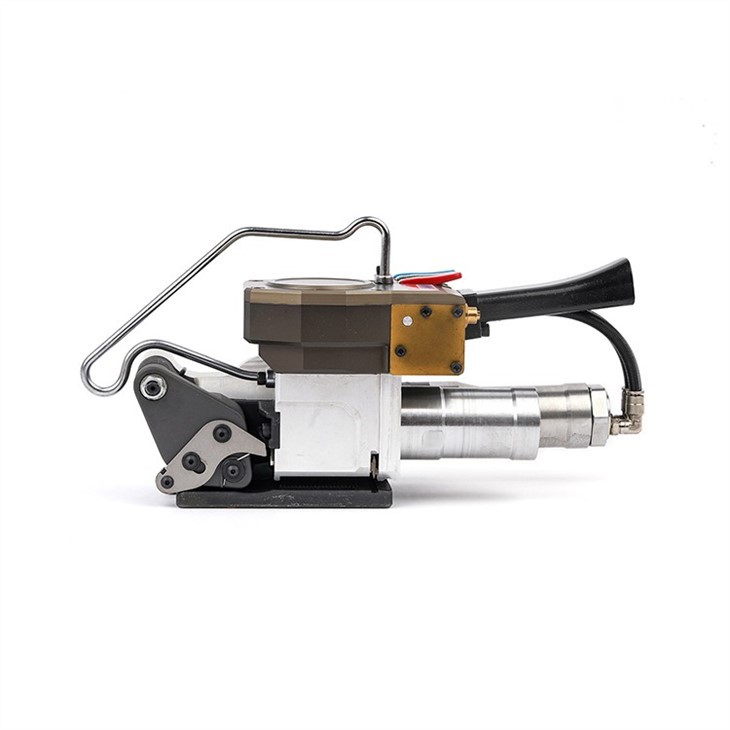

There are manual Banding Tensioner Tools. These are operated by hand, and their torque range is often limited by the physical strength of the user. Manual tools typically have a lower torque range, usually up to around 20 - 30 Nm. They're great for small - scale operations or for strapping light loads where precision and high - tension are not as critical.
Then, there are Pneumatic Plastic Strapping Tools. These tools use compressed air to generate the force needed to tension the strapping. Pneumatic tools can offer a wider and more precise torque range. They can be adjusted to apply the right amount of torque for different types of plastic strapping and loads. The torque range for pneumatic Banding Tensioner Tools can be from 10 to 50 Nm, depending on the model.
There are also electric Banding Tensioner Tools. These are powered by electricity and can provide a consistent and adjustable torque. Electric tools are often used in industrial settings where high - volume strapping is required. They can have a torque range similar to pneumatic tools, but some high - end electric models can go even higher, up to 80 Nm or more.
And let's not forget about Hand Held Strapping Tools. These are versatile tools that can be used for both light and medium - duty strapping. Their torque range can vary depending on whether they're manual, pneumatic, or electric. Hand - held tools are popular because they're easy to use and can be taken to different locations around a warehouse or factory.
When choosing a Banding Tensioner Tool, it's important to consider the torque range that suits your specific needs. You need to think about the type of strapping material, the size and weight of the loads you'll be strapping, and the volume of strapping work you have.
If you're unsure about which torque range is right for your application, don't worry! Our team of experts is here to help. We've been in the business of supplying Banding Tensioner Tools for years, and we know all about the ins and outs of torque and strapping.
Whether you're a small business looking for a simple manual tool or a large industrial operation in need of a high - powered electric or pneumatic tool, we've got you covered. We offer a wide range of Banding Tensioner Tools with different torque ranges to meet your every requirement.
If you're interested in learning more about our Banding Tensioner Tools or if you have any questions about torque ranges, feel free to reach out to us. We'd be more than happy to have a chat with you and help you find the perfect tool for your strapping needs. Let's get your packages and loads strapped up securely and efficiently!
References
- Engineering textbooks on mechanical design and torque principles
- Industry standards and guidelines for strapping tools and materials