

What is the recommended plastic band thickness for a plastic banding tool?
As a well - established plastic banding tool supplier, I often encounter numerous inquiries from customers regarding the recommended plastic band thickness for our tools. This is a crucial aspect as using an inappropriate band thickness can lead to inefficiencies, damage to the tool, and even inadequate strapping of your products. In this blog, I'll delve into the factors influencing the choice of plastic band thickness and provide some general recommendations.
Understanding the Types of Plastic Bands and Their Characteristics
There are mainly two common types of plastic bands used with plastic banding tools: Polypropylene (PP) and Polyethylene Terephthalate (PET).
PP plastic bands are cost - effective and lightweight. They are flexible and have good shock absorption properties. These bands are ideal for lighter - duty applications, such as bundling newspapers, magazines, and small packages. However, they have relatively lower tensile strength compared to PET bands.
PET plastic bands, on the other hand, are much stronger and more rigid. They have a high resistance to stretching and can withstand greater tension. PET bands are suitable for heavy - duty applications, like securing large pallets of goods during transportation and storage.

Factors Affecting the Recommended Band Thickness
1. Application and Load Weight
The most important factor when considering plastic band thickness is the nature of the application and the weight of the load to be strapped. For light - duty applications where the load is small and lightweight, thinner plastic bands can be used. For example, when bundling a few books or small office supplies, a plastic band with a thickness of 0.4 - 0.6 mm can be sufficient. This provides just enough strength to hold the items together without being overly cumbersome.
For medium - duty applications, such as strapping boxes of consumer goods, a band thickness of 0.6 - 0.8 mm is often recommended. This additional thickness offers more strength and durability to withstand the handling and movement during distribution.
In heavy - duty scenarios, like palletizing industrial products, thicker bands in the range of 0.8 - 1.2 mm or even thicker may be required. These bands can handle the high tension and weight without breaking or losing their grip.
2. Tool Compatibility
Each plastic banding tool is designed to work with a specific range of plastic band thicknesses. It is essential to check the tool's user manual or technical specifications to determine the compatible band thicknesses. Using a band that is too thick or too thin for the tool can cause problems. If the band is too thick, the tool may not be able to tension or seal the band properly, leading to an unreliable strap. Conversely, if the band is too thin, it may not be strong enough to hold the load, and it could also cause jams in the tool.
Our company offers a wide range of plastic banding tools that are designed to be versatile. For instance, our Battery Powered Plastic Strapping Tool can handle a variety of band thicknesses, making it suitable for different applications.
3. Storage and Environmental Conditions
The storage and environmental conditions where the strapped items will be placed also play a role in determining the band thickness. If the items are stored in a humid environment, a thicker band may be more resistant to degradation. Similarly, if the goods will be exposed to extreme temperatures, a thicker and more durable band may be necessary to maintain its strength over time.
General Recommendations for Plastic Band Thickness
| Application Category | Load Weight Description | Recommended Band Material | Recommended Band Thickness (mm) |
|---|---|---|---|
| Light - duty | Small and lightweight items like brochures, small packets | PP | 0.4 - 0.6 |
| Medium - duty | Medium - sized boxes, consumer product bundles | PP or PET | 0.6 - 0.8 |
| Heavy - duty | Large pallets, industrial machinery parts | PET | 0.8 - 1.2+ |
Using the Right Banding Tensioner and Strapping Tool Kit
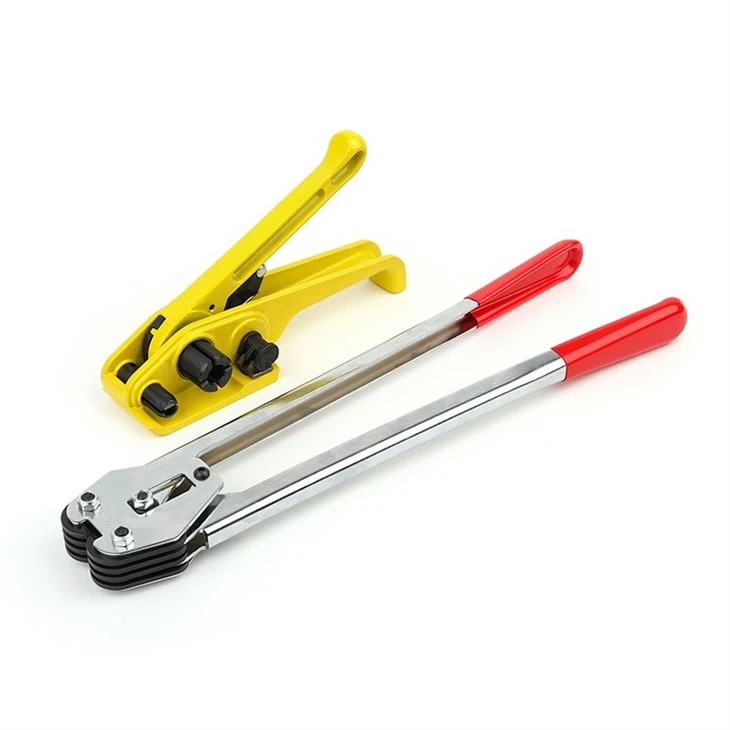
To ensure proper use of the plastic bands, it is also important to select the right tools. Our Banding Tensioner Tool is designed to accurately tension the plastic bands according to the requirements of the application. This helps in achieving a secure and reliable strap.
Moreover, our Strapping Tool Kit provides all the necessary components for efficient plastic banding. It includes tools for tensioning, sealing, and cutting the bands, making it a convenient solution for various strapping tasks.
Conclusion: Making the Right Choice
Choosing the right plastic band thickness for your plastic banding tool is essential for ensuring the efficiency and reliability of your strapping operations. By considering factors such as the application, load weight, tool compatibility, and environmental conditions, you can select the most suitable band thickness for your needs.
If you have any further questions about plastic band thickness, or if you are interested in our plastic banding tools, we encourage you to reach out to us for more detailed information and guidance. Our team of experts is always ready to assist you in making the right choice for your business.
References
- Packaging Industry Standards: General guidelines on plastic banding and strapping materials.
- Material Science Studies: Research on the mechanical properties of PP and PET plastics.
- Internal product documentation and testing results from our company's R & D department.