

When it comes to securing packages, products, or materials, banding strap tools play a crucial role. As a supplier of banding strap tools, I often encounter customers who are unsure about the differences between manual and automatic banding strap tools. In this blog post, I will delve into the key distinctions between these two types of tools, their respective advantages and disadvantages, and help you determine which one is the best fit for your specific needs.
Operational Mechanism
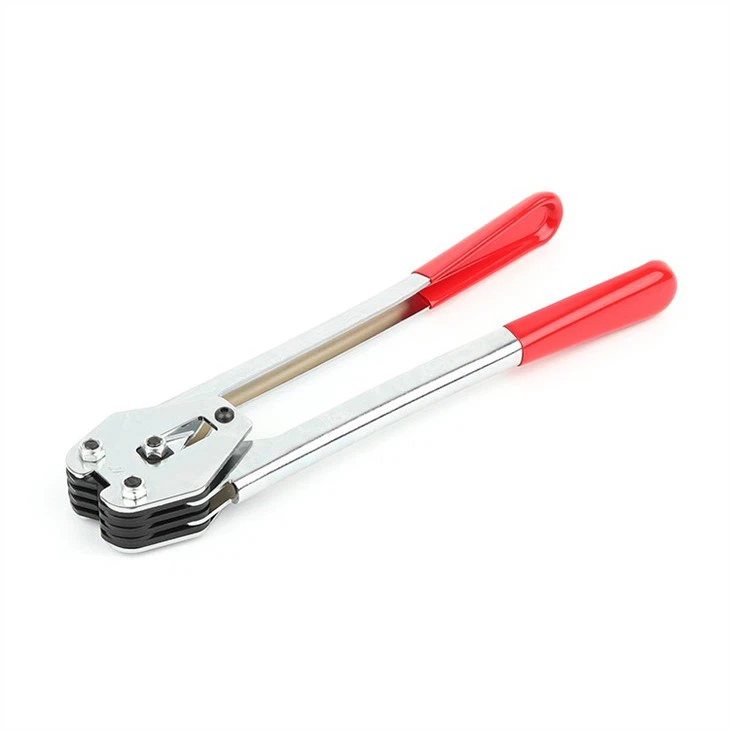
The most fundamental difference between manual and automatic banding strap tools lies in their operational mechanisms. Manual banding strap tools require human intervention for every step of the strapping process. This includes feeding the strap around the package, tensioning it, and sealing the strap. For example, with a basic manual strapping tool, an operator has to manually insert the strap through the tool, pull it tight around the item to be strapped, and then use a separate sealing mechanism, such as a buckle or a heat - sealing element (if it's a heat - sealable strap), to secure the ends of the strap together.
On the other hand, automatic banding strap tools are designed to automate most, if not all, of the strapping process. These tools are equipped with motors, sensors, and control systems that can feed the strap, tension it to a pre - set level, and seal the strap without constant human input. Once the package is placed in the correct position, the operator simply needs to press a button or activate a trigger, and the tool will complete the entire strapping operation.
Efficiency and Productivity
Efficiency is a major factor to consider when choosing between manual and automatic banding strap tools. Manual tools are generally slower in terms of the number of straps they can apply per unit of time. Since each step of the strapping process is done manually, it takes more time and effort, especially when dealing with a large volume of packages. For instance, an operator using a manual tool might be able to strap 10 - 15 packages per hour, depending on the complexity of the strapping and the operator's skill level.
Automatic banding strap tools, however, can significantly increase productivity. They can strap packages at a much faster rate, often completing 30 - 60 or more strapping operations per hour. This makes them ideal for high - volume production environments, such as manufacturing plants, warehouses, and distribution centers, where speed is of the essence. By automating the process, automatic tools also reduce the physical strain on operators, allowing them to work for longer periods without fatigue.
Precision and Consistency
Precision and consistency are important for ensuring that the straps are applied correctly and securely. Manual banding strap tools rely on the operator's skill and judgment to achieve the right tension and seal. This means that there can be some variation in the quality of the strapping from one package to another. An inexperienced operator may not be able to apply the same amount of tension each time, which can lead to loose or overly tight straps.
Automatic banding strap tools, on the other hand, offer a high degree of precision and consistency. They are programmed to apply a specific amount of tension and create a uniform seal every time. This is particularly important for applications where the integrity of the strap is critical, such as in the shipping of heavy or fragile items. With automatic tools, you can be confident that each package will be strapped with the same level of quality, reducing the risk of damage during transit.
Cost
Cost is another significant consideration. Manual banding strap tools are generally more affordable upfront. They have a simpler design and do not require complex electronics or motors, which makes them less expensive to purchase. Additionally, they do not consume electricity or other forms of energy, so there are no ongoing energy costs associated with their use. However, when considering the long - term cost, manual tools may end up being more expensive due to the higher labor costs associated with their operation.

Automatic banding strap tools, while more expensive to purchase initially, can offer cost savings in the long run. Although they require an investment in the tool itself and may have some energy consumption, the increased productivity and reduced labor requirements can offset the initial cost. In high - volume operations, the savings in labor costs over time can be substantial.
Flexibility
Manual banding strap tools offer greater flexibility in terms of the types of packages and strapping applications they can handle. They can be easily adjusted to accommodate different strap widths, package sizes, and shapes. Since they do not rely on a fixed set of sensors and control systems, operators can use them in a variety of environments and for different types of strapping tasks. For example, a manual tool can be used to strap irregularly shaped items or packages with unique strapping requirements.
Automatic banding strap tools, while highly efficient, may be less flexible. They are often designed for specific strap widths and package sizes, and may require some reconfiguration or adjustment to handle different types of packages. However, many modern automatic tools are becoming more versatile, with adjustable settings that allow them to handle a wider range of applications.
Applications
The choice between manual and automatic banding strap tools also depends on the specific application. Manual tools are well - suited for small - scale operations, such as workshops, small businesses, or occasional strapping tasks. They are also a good option for applications where precision and speed are not the primary concerns, or where the operator has more control over the strapping process.
Automatic banding strap tools are commonly used in large - scale manufacturing, distribution, and logistics operations. They are ideal for applications where high - volume, consistent, and fast strapping is required. For example, in a food processing plant, automatic tools can be used to strap boxes of products quickly and efficiently as they move along a conveyor belt.
Related Products
If you are interested in exploring different types of banding strap tools, I recommend checking out our Strapping Sealer Tool, Plastic Strapping Sealer, and Banding Sealer. These products offer a range of features and capabilities to meet your specific strapping needs.
Conclusion
In conclusion, both manual and automatic banding strap tools have their own advantages and disadvantages. Manual tools are more affordable, flexible, and suitable for small - scale operations, while automatic tools offer higher efficiency, precision, and productivity, making them ideal for high - volume applications. When choosing between the two, it is important to consider your specific needs, budget, and the volume of packages you need to strap.
If you have any questions or need further assistance in selecting the right banding strap tool for your business, please feel free to contact us. Our team of experts is ready to help you make an informed decision and provide you with the best solution for your strapping requirements.
References
- Packaging Machinery Manufacturers Institute (PMMI). (20XX). Guide to Strapping Tools.
- Industry Research Reports on Packaging Equipment. (20XX). Market Analysis of Banding Strap Tools.