

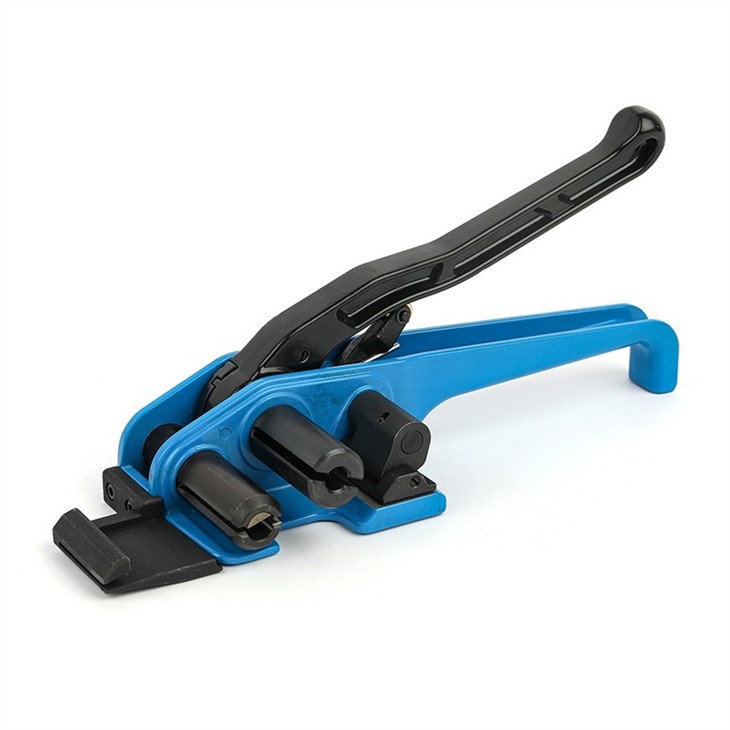
When it comes to the packaging of food products, safety, hygiene, and efficiency are of utmost importance. Manual strapping tools are commonly used in various industries for securing packages, but the question arises: Can a manual strapping tool be used for strapping food products? As a supplier of manual strapping tools, I will delve into this topic, exploring the feasibility, considerations, and best practices.
Feasibility of Using Manual Strapping Tools for Food Products
Manual strapping tools offer several advantages that make them potentially suitable for strapping food products. Firstly, they are cost - effective. For small to medium - sized food businesses, investing in expensive automated strapping systems may not be financially viable. Manual strapping tools provide an affordable alternative that can still achieve reliable strapping results.
Secondly, manual strapping tools are highly portable. They can be easily moved around the packaging area, allowing for flexibility in the packaging process. This is particularly useful in food production facilities where different types of products are packaged in various locations.
In terms of functionality, manual strapping tools can effectively secure food packages. Whether it's bundling multiple food items together or securing a single large package, these tools can apply sufficient tension to keep the strapping in place during transportation and storage. For example, when packaging a stack of canned goods, a manual strapping tool can ensure that the cans stay tightly packed and do not shift.
Considerations for Using Manual Strapping Tools with Food Products
Hygiene
Hygiene is the most critical consideration when using manual strapping tools for food products. The strapping materials and the tools themselves must be clean and free from contaminants. The strapping should be made from food - grade materials. For instance, some plastic strapping materials are specifically designed to meet food safety standards. These materials are non - toxic and do not release harmful substances that could contaminate the food.
The manual strapping tool also needs to be regularly cleaned. After each use, it should be wiped down with a suitable cleaning agent to remove any dirt, dust, or food particles that may have adhered to it. If the tool is used in a wet environment, such as a seafood or meat packaging area, it should be dried thoroughly to prevent the growth of bacteria.
Compatibility with Packaging Materials
Food products come in a wide variety of packaging materials, including cardboard boxes, plastic containers, and paper bags. The manual strapping tool must be compatible with these materials. For cardboard boxes, a Box Strapping Tool can be used. This type of tool is designed to provide a secure hold on the box without causing damage to the cardboard.
When it comes to plastic containers, the strapping material should be chosen carefully to ensure that it does not scratch or damage the container surface. Some manual strapping tools are equipped with adjustable tension settings, which can be adjusted according to the fragility of the packaging material.
Product Integrity
The strapping process should not compromise the integrity of the food products. For example, if the tension applied by the manual strapping tool is too high, it could crush or deform delicate food items such as pastries or fruits. On the other hand, if the tension is too low, the strapping may come loose during transit, leading to product damage.

Best Practices for Using Manual Strapping Tools with Food Products
Selecting the Right Strapping Material
As mentioned earlier, food - grade strapping materials are essential. In addition to plastic strapping, cord strapping can also be a good option. Cord strapping is flexible and can conform to the shape of the food package. A Cord Strapping Tensioner can be used to apply the right amount of tension to the cord strapping.
Training Employees
Proper training of employees is crucial. They should be taught how to use the manual strapping tool correctly, including how to adjust the tension, feed the strapping material, and seal the strapping. Training should also cover hygiene practices, such as cleaning the tool and handling the strapping materials in a clean environment.
Regular Maintenance
Regular maintenance of the manual strapping tool is necessary to ensure its proper functioning. This includes lubricating moving parts, checking for wear and tear, and replacing any damaged components. A well - maintained tool will not only perform better but also reduce the risk of contamination.
Conclusion
In conclusion, a manual strapping tool can be used for strapping food products, provided that the necessary precautions are taken. By considering hygiene, compatibility with packaging materials, and product integrity, and following best practices, food businesses can safely and effectively use manual strapping tools in their packaging processes.
As a supplier of Cord Strapping Tools, we are committed to providing high - quality, food - safe strapping solutions. Our manual strapping tools are designed to meet the specific needs of the food industry, with features that ensure ease of use, reliability, and hygiene.
If you are interested in learning more about our manual strapping tools or have any questions regarding the strapping of food products, we encourage you to contact us for a detailed discussion. Our team of experts is ready to assist you in finding the best strapping solution for your food packaging needs.
References
- Packaging Machinery Manufacturers Institute (PMMI). Guidelines for Food Packaging Equipment Hygiene.
- American Society of Mechanical Engineers (ASME). BPE - 2019 Standard for Sanitary Design of Bioprocessing Equipment.