

When it comes to securing items for storage or transportation, a hand strapping tool is a popular choice for many businesses. But a common question that arises is whether a hand strapping tool can be used for strapping items with sharp edges. In this blog post, we'll delve into this topic, explore the potential challenges, and provide solutions. As a hand strapping tool supplier, we have the expertise and experience to offer valuable insights.
Understanding Hand Strapping Tools
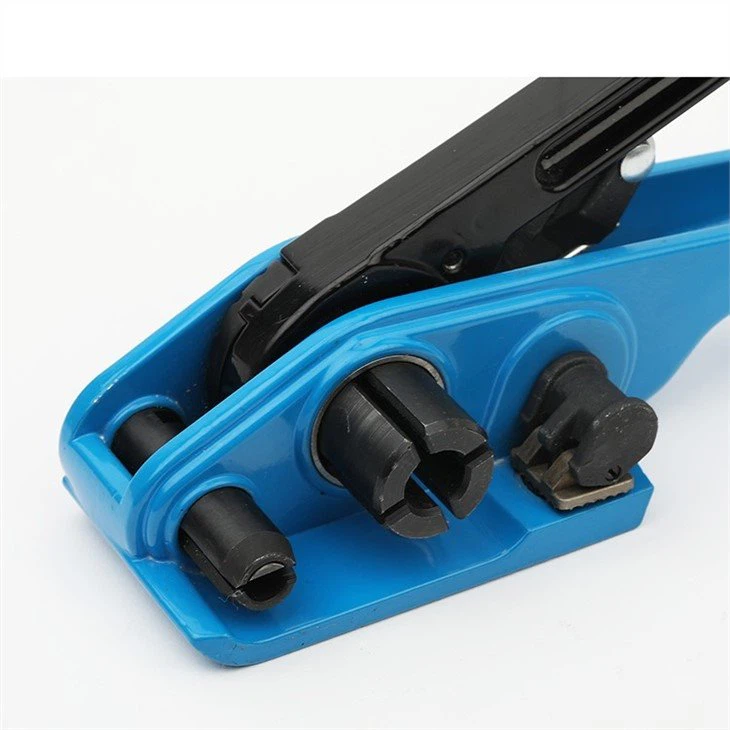
Hand strapping tools are designed to apply straps around items to hold them together securely. These tools come in various types, including Strapping Tensioner and Sealer, Plastic Banding Tool, and Poly Strapping Sealer. They are commonly used with polypropylene (PP) or polyester (PET) strapping materials, which are known for their strength and durability.
Challenges of Strapping Items with Sharp Edges
Using a hand strapping tool on items with sharp edges presents several challenges. The most significant issue is the risk of the strap being cut or damaged by the sharp edges. This can compromise the integrity of the strap, leading to it breaking during handling, storage, or transportation. Additionally, the sharp edges can also cause wear and tear on the hand strapping tool itself, reducing its lifespan and performance.
Impact on Strapping Material
Polypropylene and polyester strapping materials are generally strong and resistant to abrasion. However, sharp edges can easily cut through these materials, especially if the strap is under high tension. Once the strap is cut, it loses its ability to hold the items together securely, which can result in the items shifting or coming apart.
Impact on Hand Strapping Tool
The sharp edges of the items being strapped can also cause damage to the hand strapping tool. For example, the teeth of the tensioner or sealer can be dulled or broken by the sharp edges, making it difficult to apply the strap properly. This can lead to inconsistent tensioning and sealing, further compromising the effectiveness of the strapping.
Solutions to Overcome the Challenges
Despite the challenges, it is possible to use a hand strapping tool to strap items with sharp edges effectively. Here are some solutions that we recommend:

Protective Edge Guards
One of the most effective ways to prevent the strap from being cut by sharp edges is to use protective edge guards. These guards are typically made of materials such as cardboard, foam, or plastic, and they are placed between the strap and the sharp edges of the item. Edge guards act as a buffer, absorbing the impact of the sharp edges and protecting the strap from being cut.
Choose the Right Strapping Material
When strapping items with sharp edges, it's important to choose the right strapping material. Polyester (PET) strapping is generally more resistant to cutting and abrasion than polypropylene (PP) strapping. It has a higher tensile strength and is less likely to be damaged by sharp edges. Therefore, we recommend using PET strapping for items with sharp edges.
Proper Strapping Technique
Using the correct strapping technique is also crucial when strapping items with sharp edges. Make sure to position the strap away from the sharp edges as much as possible. If the item has multiple sharp edges, try to wrap the strap around the smooth areas of the item first and then secure it in place. Additionally, avoid over-tightening the strap, as this can increase the pressure on the sharp edges and increase the risk of the strap being cut.
Regular Maintenance of Hand Strapping Tool
To ensure the longevity and performance of your hand strapping tool, it's important to perform regular maintenance. This includes cleaning the tool after each use, lubricating the moving parts, and inspecting the teeth of the tensioner and sealer for any signs of damage. If any parts are damaged, replace them immediately to prevent further damage to the tool.
Case Studies
To illustrate the effectiveness of these solutions, let's look at a few case studies.
Case Study 1: Metal Parts Manufacturer
A metal parts manufacturer was having issues with their straps breaking during transportation due to the sharp edges of their products. They started using protective edge guards and switched from polypropylene to polyester strapping. As a result, the number of strap failures decreased significantly, and they were able to transport their products more safely and efficiently.
Case Study 2: Furniture Manufacturer
A furniture manufacturer was experiencing problems with their hand strapping tool wearing out quickly when strapping items with sharp edges. They implemented a regular maintenance schedule for their tools and started using a different strapping technique to avoid putting the tool in direct contact with the sharp edges. This resulted in a longer lifespan for their hand strapping tools and more consistent strapping results.
Conclusion
In conclusion, while using a hand strapping tool on items with sharp edges presents challenges, it is definitely possible to do so effectively. By using protective edge guards, choosing the right strapping material, employing proper strapping techniques, and performing regular maintenance on your hand strapping tool, you can overcome these challenges and ensure that your items are strapped securely.
As a leading hand strapping tool supplier, we are committed to providing high-quality products and solutions to meet your strapping needs. If you have any questions or need further advice on strapping items with sharp edges, please don't hesitate to contact us. We are here to help you find the best strapping solution for your specific requirements.
References
- Packaging Machinery Manufacturers Institute (PMMI). (2023). Strapping Equipment Handbook.
- International Safe Transit Association (ISTA). (2023). Packaging Testing Standards and Procedures.
- Strapping Industry Association (SIA). (2023). Best Practices for Strapping Applications.