

When it comes to securing heavy loads and packages, steel strapping is a go - to solution in many industries. As a supplier of Steel Strapping Sealers, I've been frequently asked about the special requirements for the steel strapping used with a sealer. In this blog, I'll delve into these requirements, providing you with a comprehensive understanding to ensure you make the right choices for your strapping needs.
1. Material Compatibility
The first and foremost requirement is the compatibility between the steel strapping and the sealer. Different sealers are designed to work with specific types of steel strapping. For instance, some sealers are optimized for high - carbon steel strapping, which offers excellent strength and durability. High - carbon steel strapping can withstand heavy tension and is suitable for securing large and heavy items such as construction materials or industrial machinery.
On the other hand, low - carbon steel strapping is more flexible and is often used for lighter loads. If you use a sealer designed for high - carbon steel strapping with low - carbon steel strapping, you may not achieve a proper seal. The sealer might not crimp the strapping tightly enough, leading to a weak joint that could come loose during transportation or storage.
2. Width and Thickness
The width and thickness of the steel strapping are crucial factors. Sealers are typically rated for specific strapping widths and thicknesses. Common widths of steel strapping range from 13mm to 32mm, and thicknesses can vary from 0.3mm to 1.2mm.
A sealer that is designed for a 19mm wide strapping may not work correctly with a 25mm wide strapping. Using an incompatible width can cause the sealer to misalign the strapping during the sealing process, resulting in an uneven or incomplete seal. Similarly, if the thickness of the strapping is not within the sealer's specified range, the sealer may not be able to generate enough force to crimp the strapping properly.
For example, if you try to use a thin strapping with a sealer designed for thick strapping, the sealer may over - compress the strapping, weakening it and potentially causing it to break under stress. Conversely, using a thick strapping with a sealer meant for thin strapping may result in an insufficiently tightened seal.
3. Surface Finish
The surface finish of the steel strapping also matters. Steel strapping can have different surface treatments, such as painted, galvanized, or bare. Galvanized steel strapping has a zinc coating that provides corrosion resistance, making it suitable for outdoor use or in environments where moisture is present.
However, some sealers may have difficulty forming a strong bond with galvanized strapping due to the smoothness of the zinc coating. In such cases, it may be necessary to use a sealer that is specifically designed to work with galvanized strapping or to take additional steps to ensure a proper seal, such as roughening the surface of the strapping slightly before sealing.
Painted steel strapping can add an extra layer of protection and can also be color - coded for easy identification. But similar to galvanized strapping, the paint layer can affect the sealing process. A sealer needs to be able to penetrate through the paint to form a solid connection with the underlying steel.
4. Edge Condition
The edges of the steel strapping should be smooth and free of burrs or sharp edges. Sharp edges can cause problems during the sealing process. They can damage the sealer's jaws or cause the strapping to cut into itself when being tensioned and sealed.
Burrs on the edges can also prevent the sealer from aligning the strapping correctly, leading to an improper seal. Before using the steel strapping with a sealer, it's a good practice to inspect the edges and, if necessary, use a CR - 22 Heavy Duty Steel Strapping Cutter to trim the strapping and ensure smooth edges. This cutter is designed to make clean cuts, minimizing the risk of burrs.
5. Tensile Strength
The tensile strength of the steel strapping must be appropriate for the load it is intended to secure. The sealer should be able to handle the tension required to tighten the strapping to the necessary level. If the tensile strength of the strapping is too low, it may break under the tension applied by the sealer or during normal handling.
Conversely, if the tensile strength is much higher than needed, it can be overkill and may increase the cost. You need to match the tensile strength of the strapping with the load requirements and ensure that the sealer can generate the appropriate tension. A Standard Steel Strapping Tensioner can be used to achieve the right amount of tension before sealing.
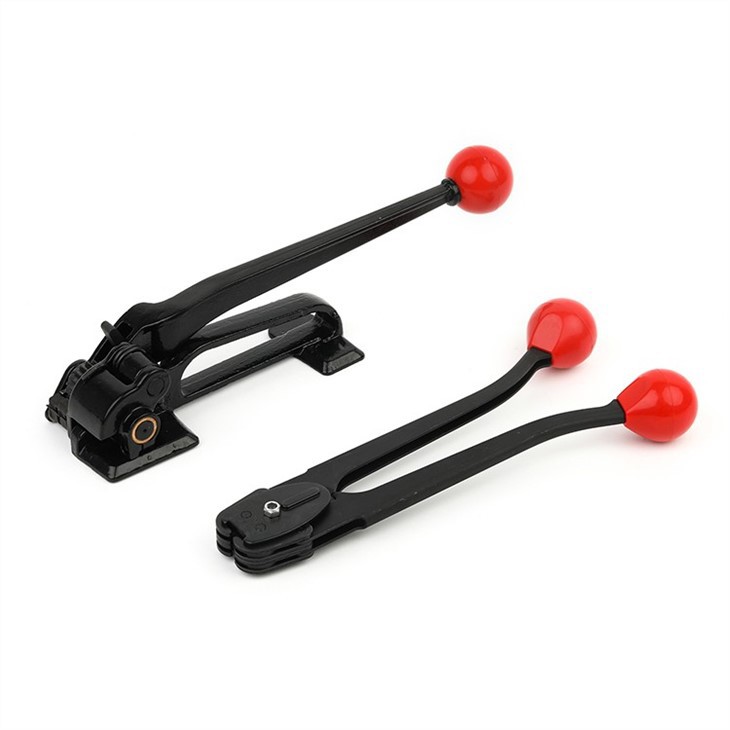

6. Joint Design
The type of joint required also influences the choice of steel strapping and sealer. There are different joint designs, such as notch joints, seal joints, and welded joints. Seal joints are the most common when using a sealer.
For a seal joint, the steel strapping needs to be compatible with the type of strap seals used. Different sealers work with different sizes and types of strap seals. For example, some sealers use flat seals, while others use round or oval seals. You need to ensure that the strapping and the seal are a good match to create a strong and reliable joint. A Strap Seal Crimping Tool can be used to crimp the strap seals onto the strapping effectively.
Conclusion
In conclusion, there are several special requirements for the steel strapping used with a sealer. Material compatibility, width and thickness, surface finish, edge condition, tensile strength, and joint design all play important roles in ensuring a proper and reliable seal. By paying attention to these requirements, you can avoid common problems such as weak joints, broken strapping, and inefficient sealing processes.
If you're in the market for steel strapping and sealers, or if you have any questions about the compatibility of your existing strapping with a sealer, don't hesitate to reach out. We're here to help you make the right choices for your specific needs. Contact us today to start a discussion about your strapping requirements and explore the best solutions for your business.
References
- Packaging Machinery Manufacturers Institute (PMMI). "Steel Strapping Best Practices."
- Industrial Packaging Association. "Guidelines for Using Steel Strapping and Sealers."